Control plane
Intent → any backend
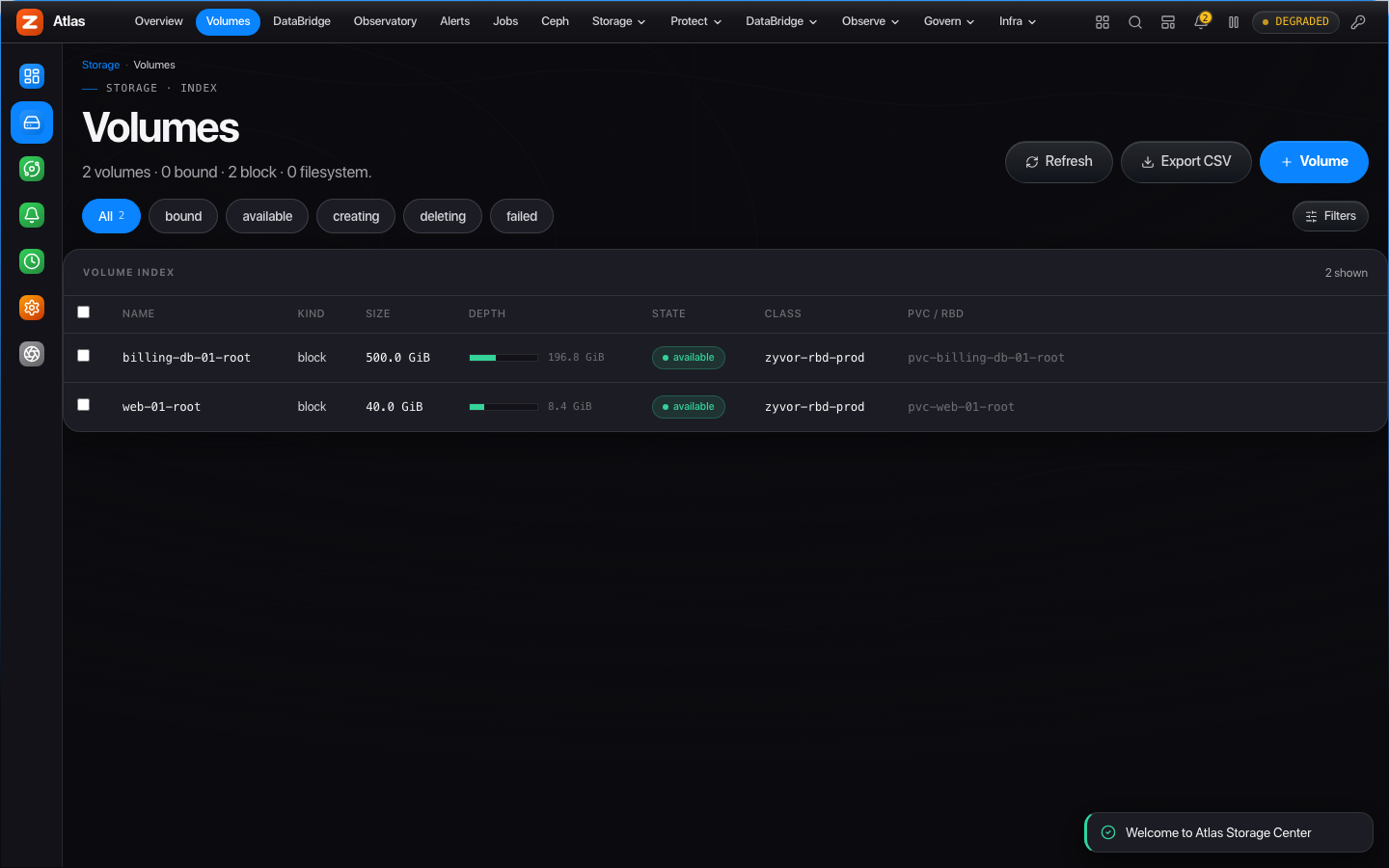
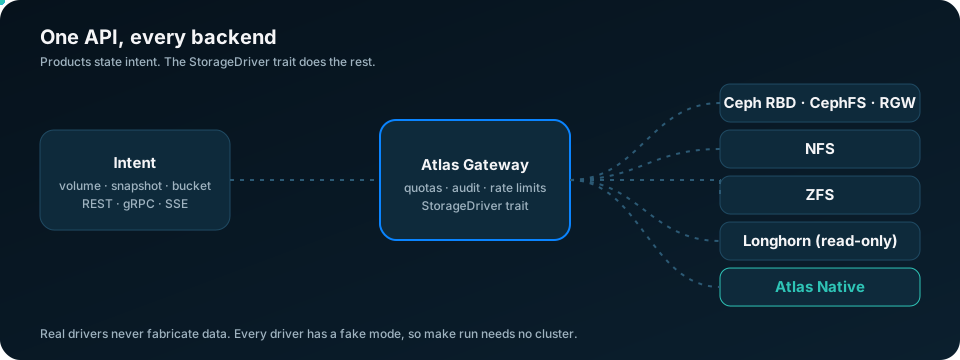
Volumes, snapshots, clones, CephFS RWX and buckets over REST and gRPC, mapped to Ceph, NFS, ZFS and Longhorn by one StorageDriver trait. A fake driver runs the whole console with no cluster.
Architecture →Atlas
A control plane that maps intent to Ceph, NFS, ZFS and Longhorn, plus Atlas Native: erasure-coded, Raft-backed, NFS, SMB and S3, with replication and clean DR failback. Apache-2.0.
$ atlasctl volume create db-data --size 200Gi --class fast
  ceph-rbd  ->  pool atlas-fast  ·  owner zorvia  ·  audit entry written
$ atlasctl dr status mirror-prod
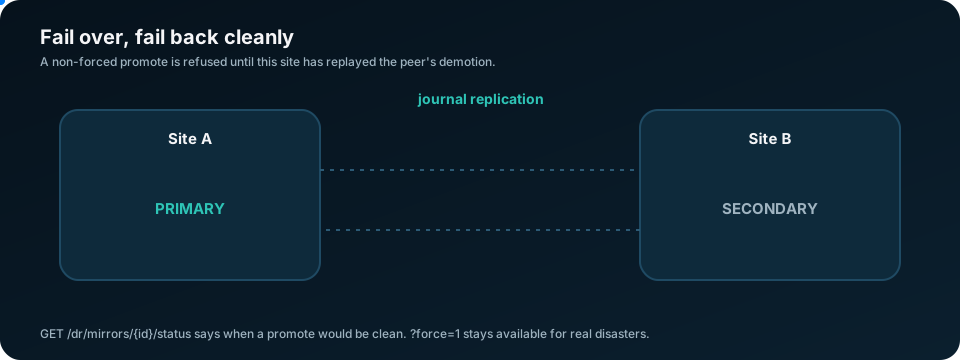
  site A primary  ·  site B replaying  ·  promote would be CLEAN
$ atlasctl dr promote mirror-prod --site B
  refused until B has replayed A's demotion (use --force for a real disaster)
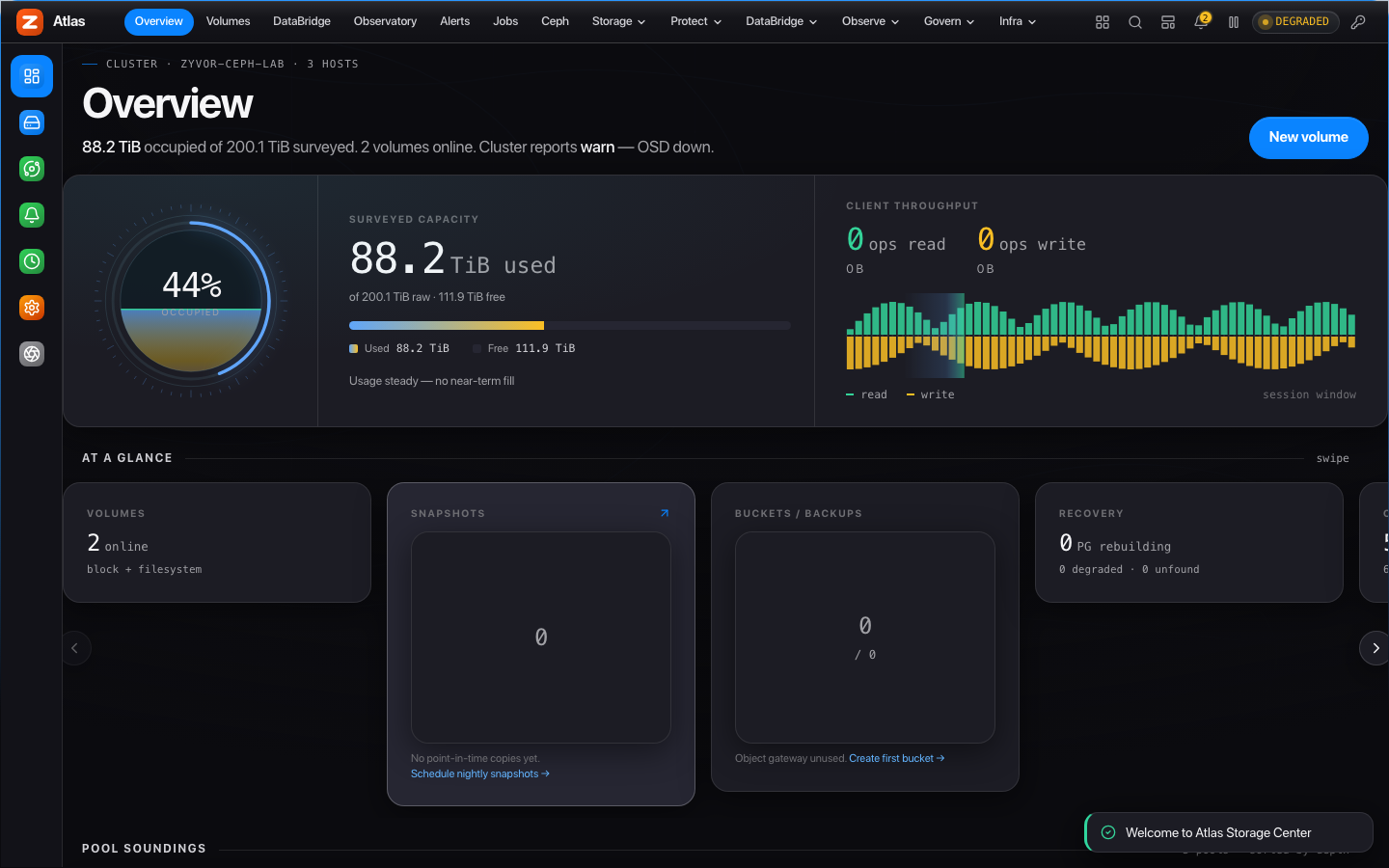
Products request production storage, not pool names or CSI quirks. Atlas owns inventory, ownership, audit and the async job engine, and when you need a filesystem of your own, Atlas Native runs it on your nodes.
Control plane
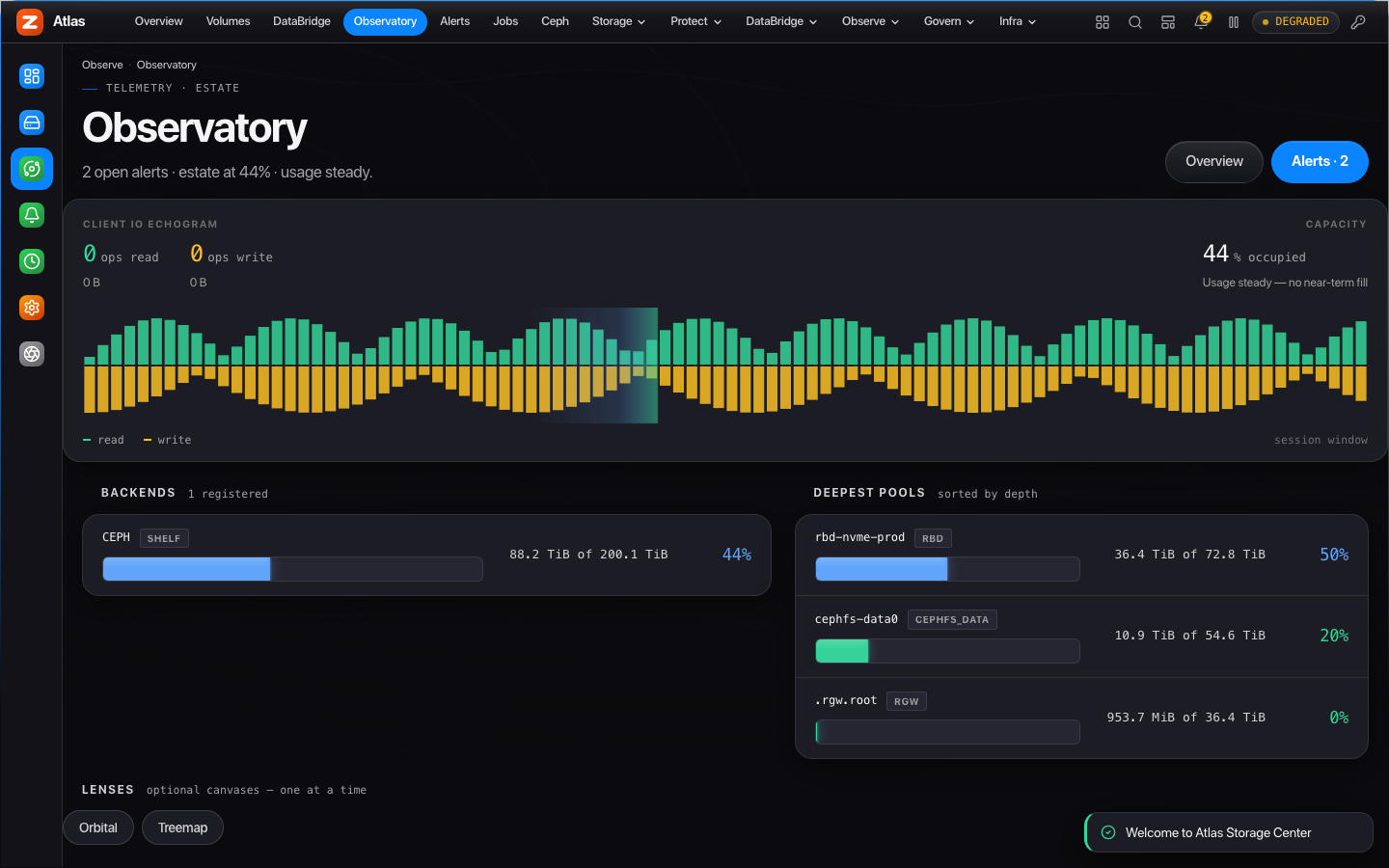
Products state intent: volumes, snapshots, clones, CephFS RWX, S3 buckets. The StorageDriver trait maps it to Ceph, NFS, ZFS, Longhorn, macOS disks or Atlas Native. Real drivers never fabricate data, and every driver has a fake mode.
Atlas Native
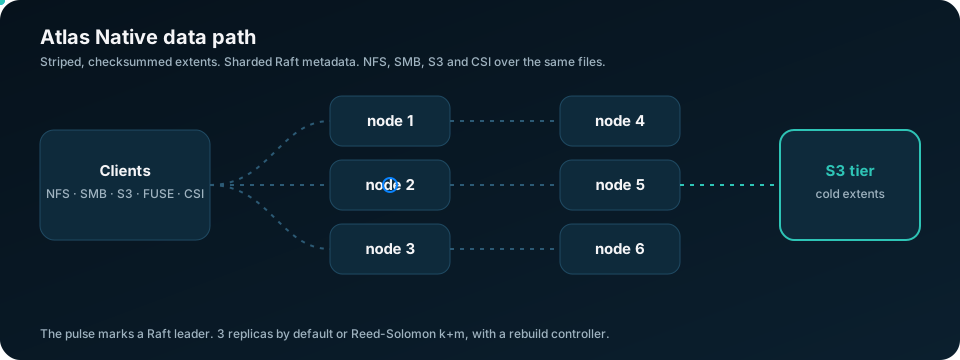
Striped, checksummed extents, sharded Raft metadata, 3 replicas or Reed-Solomon k+m, cold extents tiered to S3, and NFS, SMB, S3 and CSI over the same files. One small pod for edge sites.
Agent-ready operations
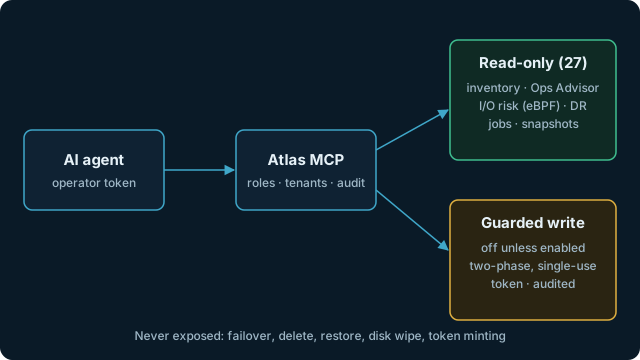
Atlas speaks the Model Context Protocol, so an AI agent can triage storage the way an operator does: the Ops Advisor, anomalies, eBPF I/O risk, DR status and jobs. It is read-only by default; the two opt-in writes (a snapshot, an alert acknowledgement) each need a single-use confirmation token, and MCP can never call out to an external LLM.
Disaster recovery
Two-way RBD mirroring and native replication. A non-forced promote is refused until this site has replayed the peer's demotion, so a failback cannot silently lose writes. Force stays available for real disasters.
Try it
A model of the DR guard, not a live system. Toggle the state and try to promote site B.
POST /dr/mirrors/prod/promote
Refused: the local rbd-mirror has not replayed the peer's demotion yet.
Mode: journal. Mirroring status is read live from rbd mirror image status.
Atlas vs Rook alone
| Atlas | Rook alone | |
|---|---|---|
| What it is | Control plane with drivers per backend, plus its own filesystem | Kubernetes operator that runs Ceph |
| Interface | Intent-based REST, gRPC and SSE | Custom resources and CSI PVCs |
| Backends | Ceph, NFS, ZFS, Longhorn, macOS disks, Atlas Native, S3 | Ceph |
| Cross-site DR | Two-way mirroring with a guarded failback; native replication | RBD mirroring CRDs |
| Database migration | DataBridge: discovery, full load, CDC, cutover | Not in scope |
| AI and agents | MCP server (27 read-only tools, opt-in guarded snapshot and alert ack), Ops Advisor, eBPF I/O risk | Not in scope |
Choose Rook alone when you only run Ceph inside Kubernetes and its own dashboard and CRDs are enough. Versus WEKA, including where WEKA is better today: the comparison.
Control plane
Volumes, snapshots, clones, CephFS RWX and buckets over REST and gRPC, mapped to Ceph, NFS, ZFS and Longhorn by one StorageDriver trait. A fake driver runs the whole console with no cluster.
Architecture →Atlas Native
Striped, checksummed extents with sharded Raft metadata, erasure coding and rebuild, S3 tiering, and NFS, SMB, S3 and CSI over the same files. Lab-verified; NVMe and RDMA benchmarks pending.
Native roadmap status →DataBridge
Six source engines, CDC, cutover, and Ceph-backed edge targets — migration as a control-plane product.
Quickstart →Agent-ready
An MCP server with 27 read-only tools: inventory, the Ops Advisor, eBPF I/O risk, Ceph, DR and jobs, with the same roles and tenant limits as the API. Two opt-in writes, snapshots and alert acknowledgement, each behind a single-use confirmation token and an audit record. Failover and delete are never exposed.
MCP and agents →Day-2 and DR
Alerts, maintenance, quotas, upgrade preflight, two-way RBD mirroring (snapshot, journal and pool modes) with a guarded failback, RBD consistency groups, and native replication to a second site.
See the console →Atlas is Apache-2.0: run it, modify it, and ship it — in production, in managed services, and in your own products.
Read the licensing guide →

The software is free under Apache-2.0. Talk to Zyvor about deployment help, support, and integrations.
Book a demoPricing