Why a standalone asset ops console?
Logistics platforms optimize dispatch. Infrastructure platforms optimize runtimes. Field teams still stitch device health, site context, and maintenance work across three consoles.
Yard’s core object is an asset. A device is one asset kind. Vehicles and route optimization can arrive later as an optional logistics extension — they do not own the data model. Device Agent, Nodra, Fleet, and OTA plug in when you need them.
One console. Every asset.
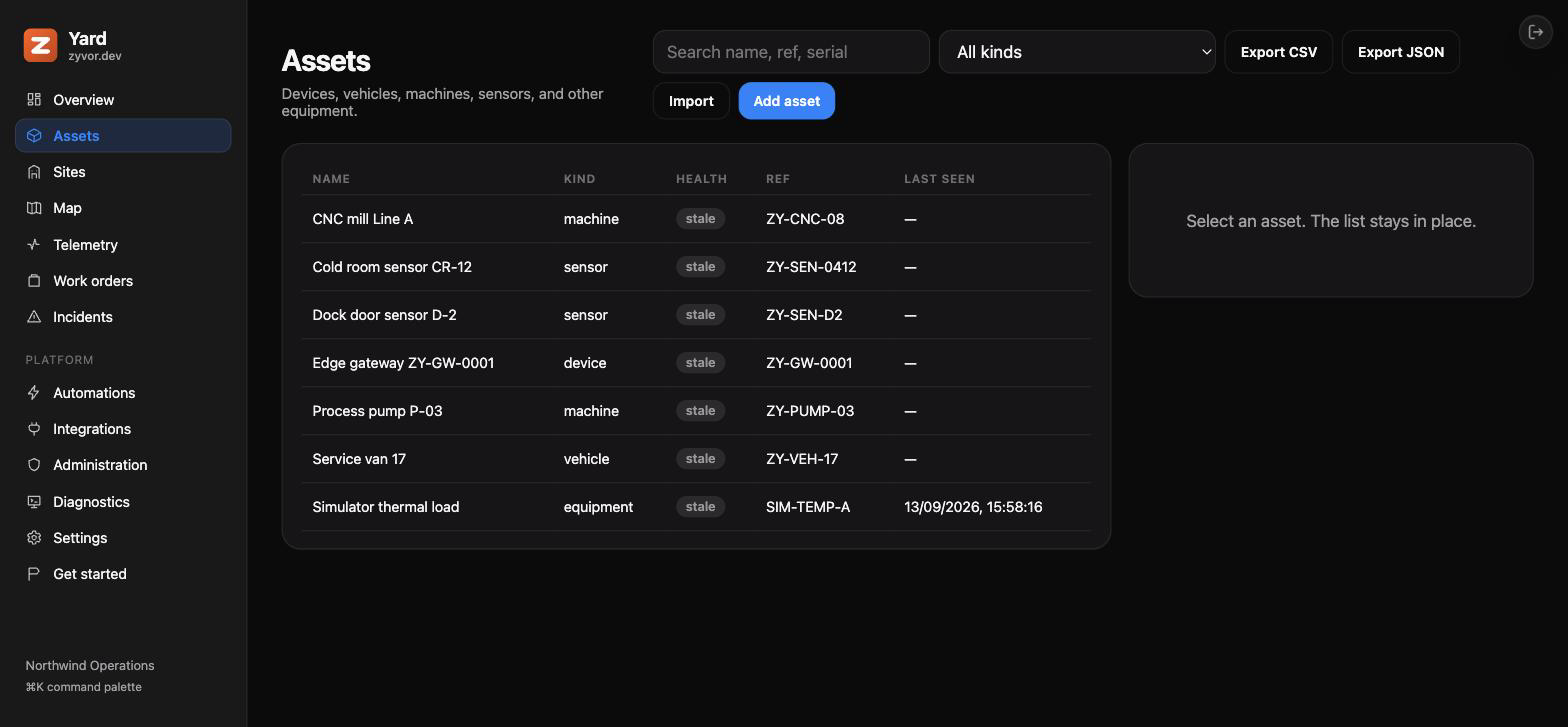
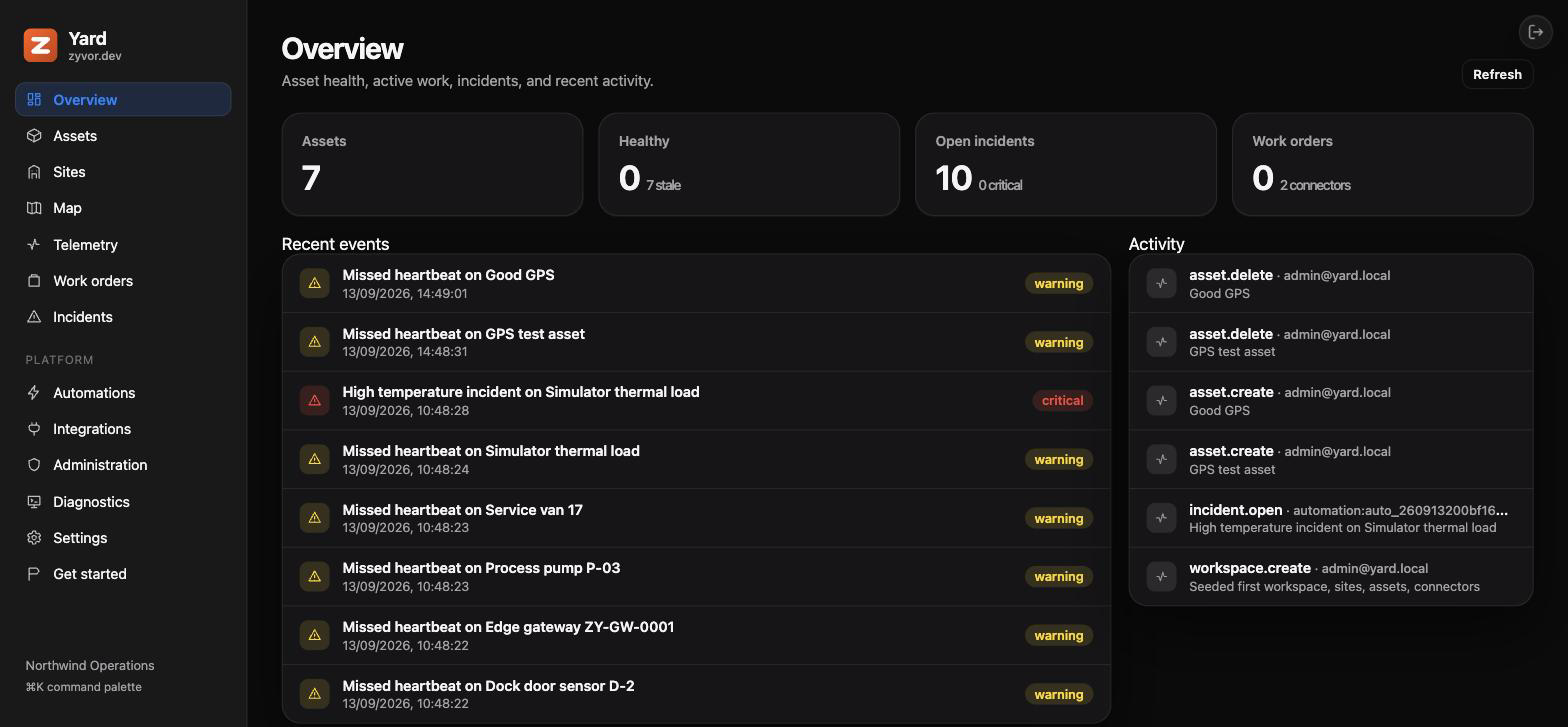
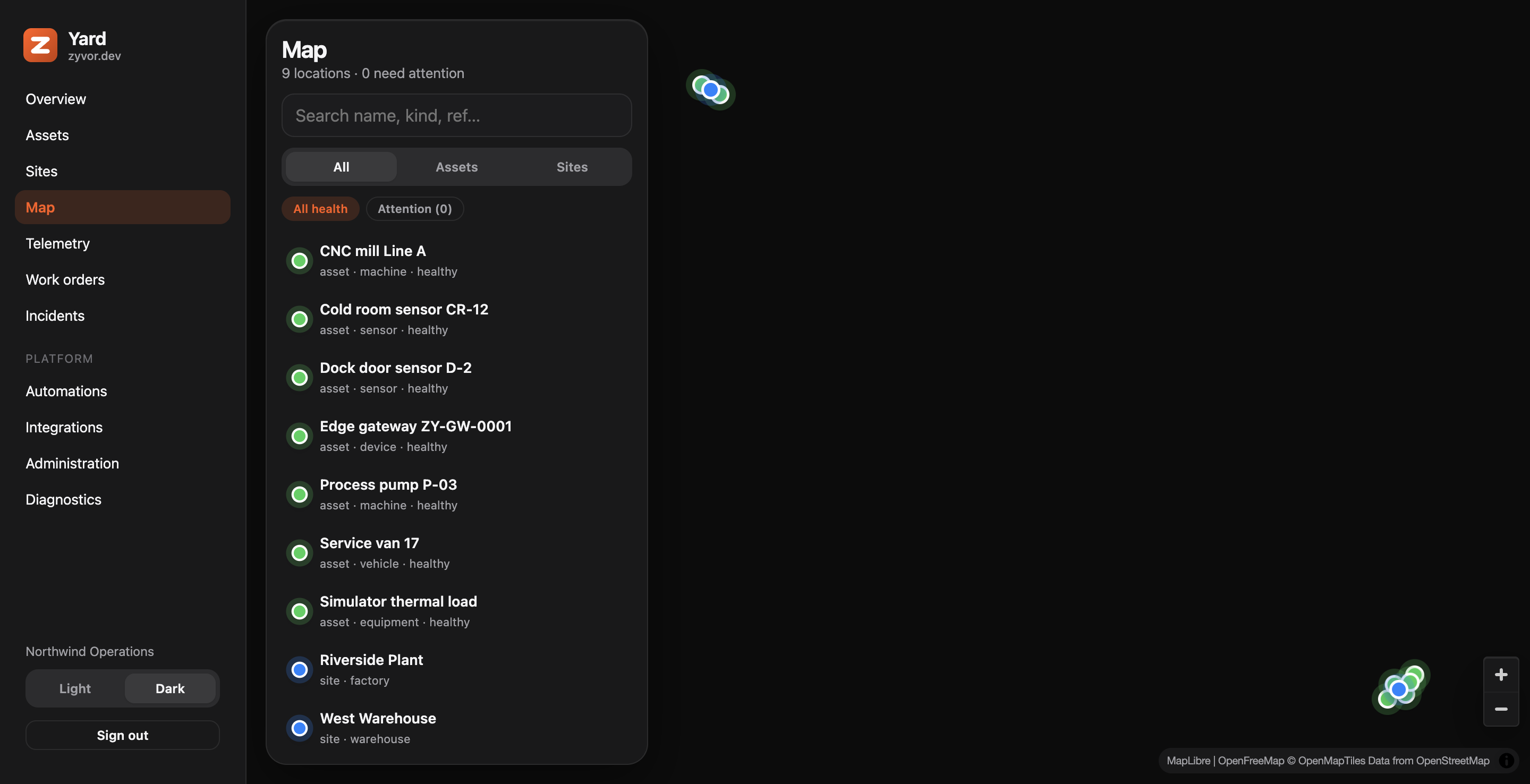
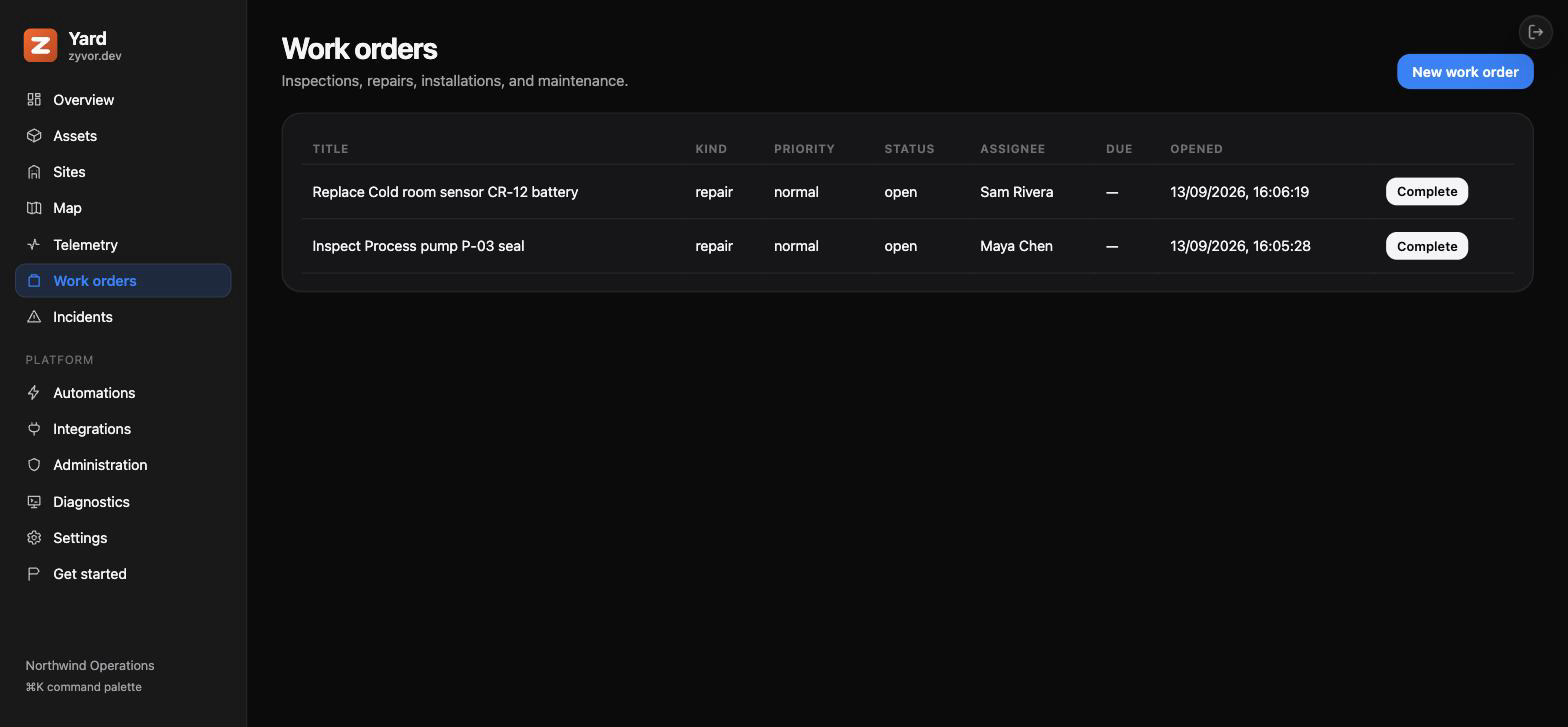
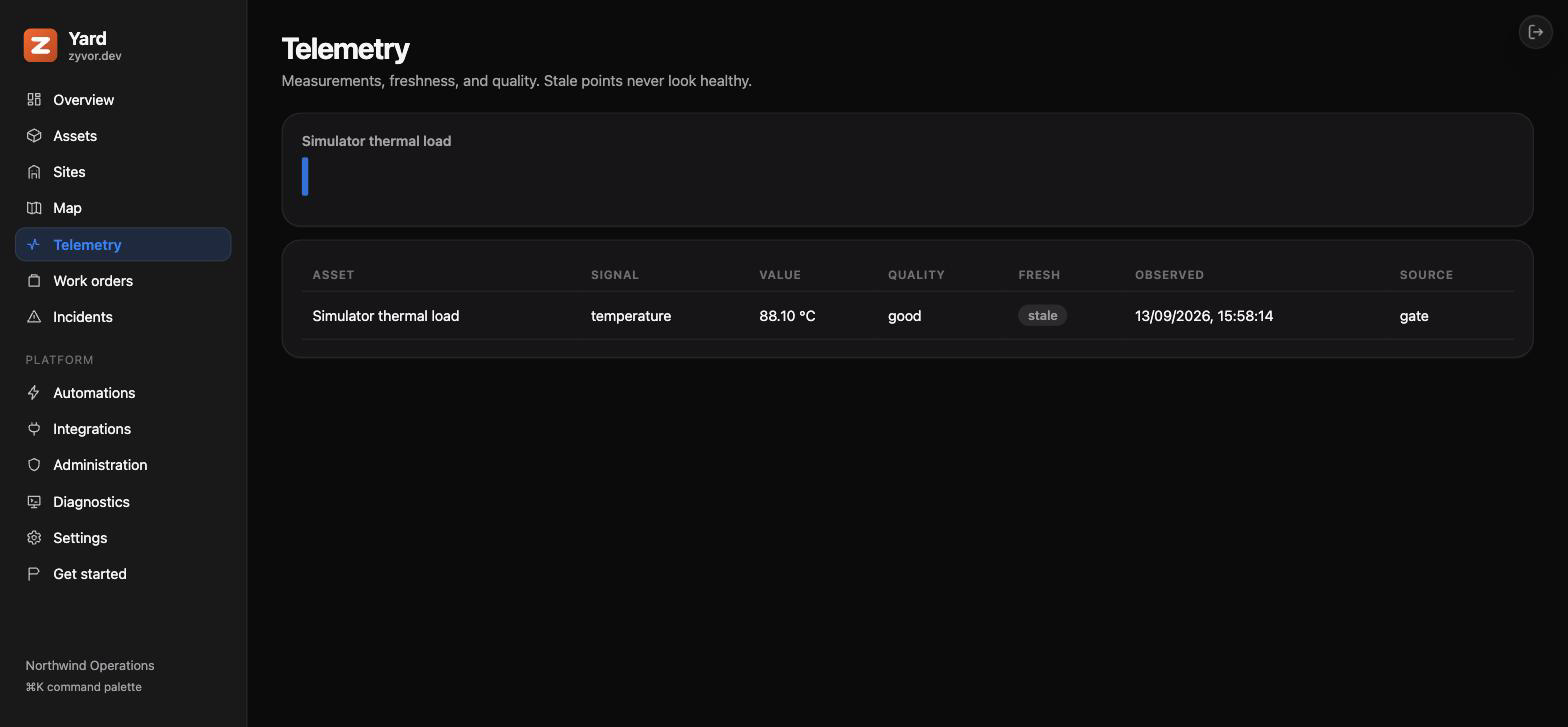
Every asset carries capabilities, a site, and a health state that decays honestly when data goes stale.
Asset registry
Devices, vehicles, machines, sensors, and equipment — with capabilities, sites, and health that stays honest when data goes stale.
Live ops loop
Background stale ticker, SSE-driven Overview and Map, and browser notifications for critical incidents — no manual refresh.
Sites & map
Factories, warehouses, and customer locations on a full-bleed MapLibre map with dark basemap and glass detail panel.
Incidents & work
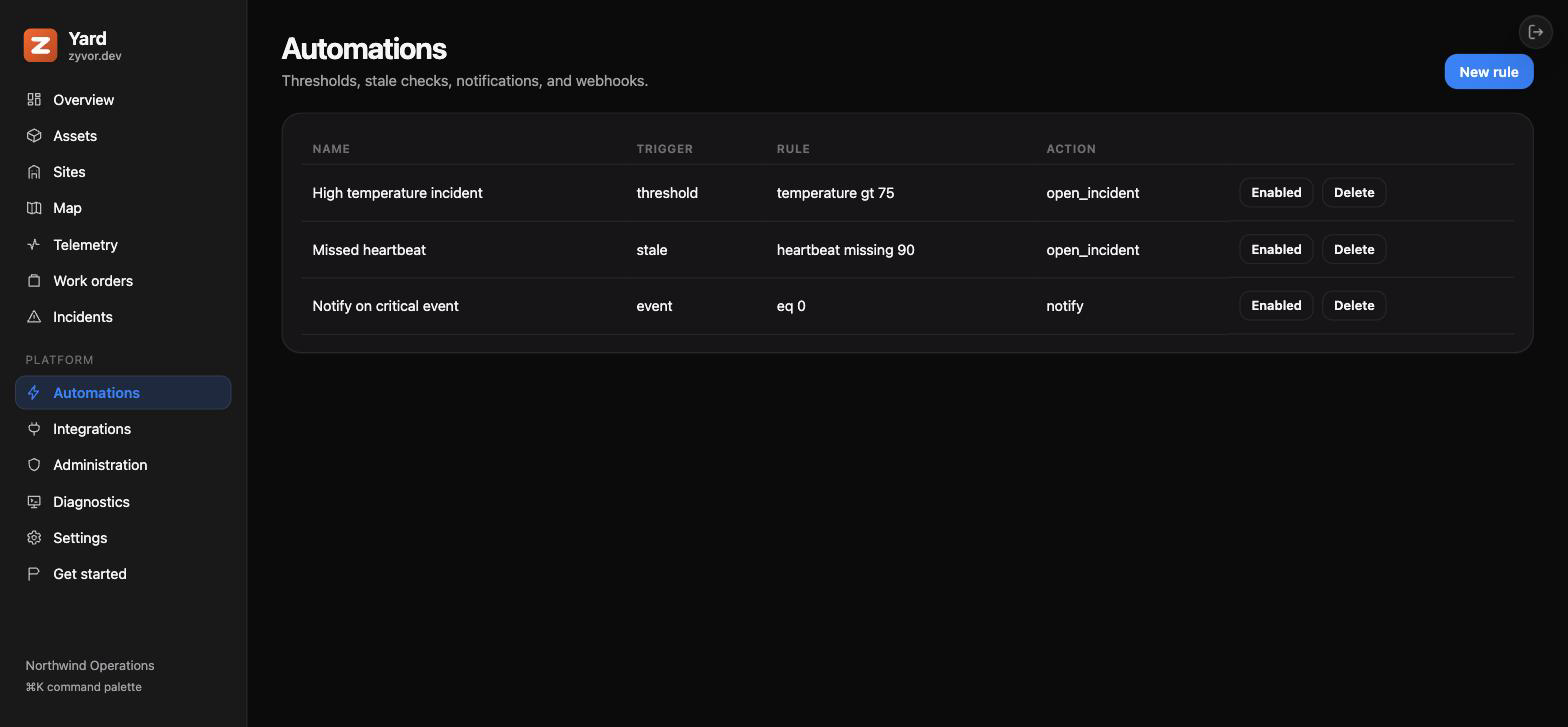
Threshold and stale automations open incidents. Standalone work orders close the loop on the asset timeline.
Automations & webhooks
Create threshold or stale rules that open incidents, notify, or POST to your webhook URL.
Optional connectors
HTTP ingest and Device Agent today. Nodra, Fleet, and OTA stay catalog-ready without owning the core model.
Apache-2.0.
No lock-in.
Every connector optional.
Open, and ready to ship
SQLite by default, Postgres when you need it. Real CI on every push (Go tests + console build). Sessions, hashed connector tokens, write RBAC, ingest rate limits, and /metrics.


Need production support or SLAs?
Yard’s core is Apache-2.0 and free to run. Zyvor Enterprise adds support contracts, SLAs, and additional products for teams that need them.
Contact sales@zyvor.dev