Zyvor · incident compiler
Turn an outage into a reproducible test.
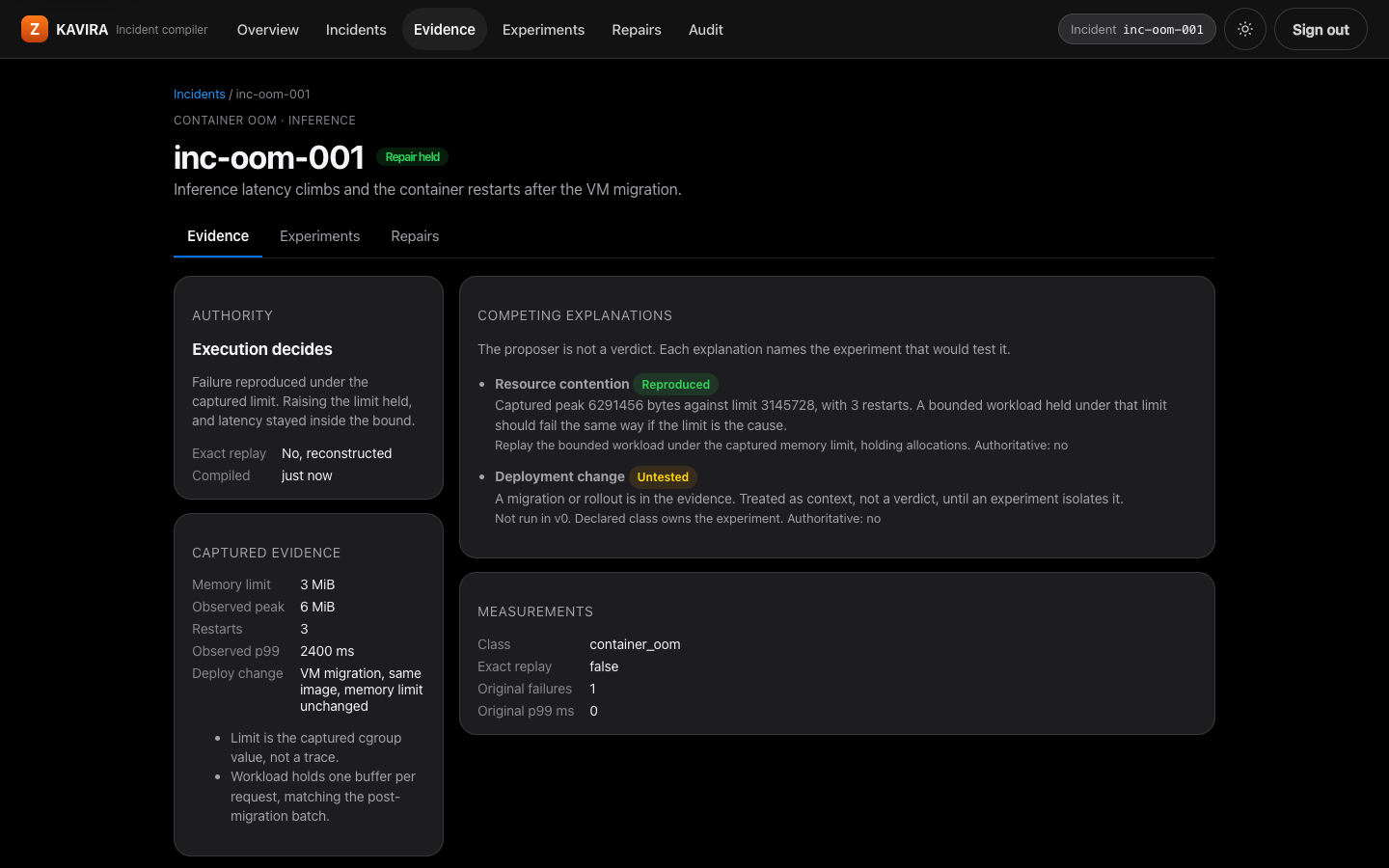
KAVIRA compiles captured production evidence into an isolated reproducer, one-factor experiments, and a repair package. The proposer lists explanations. Execution decides.
Try the live demoRun it yourself
- Evidencecaptured, not replayed
- Hypothesesproposed, never authoritative
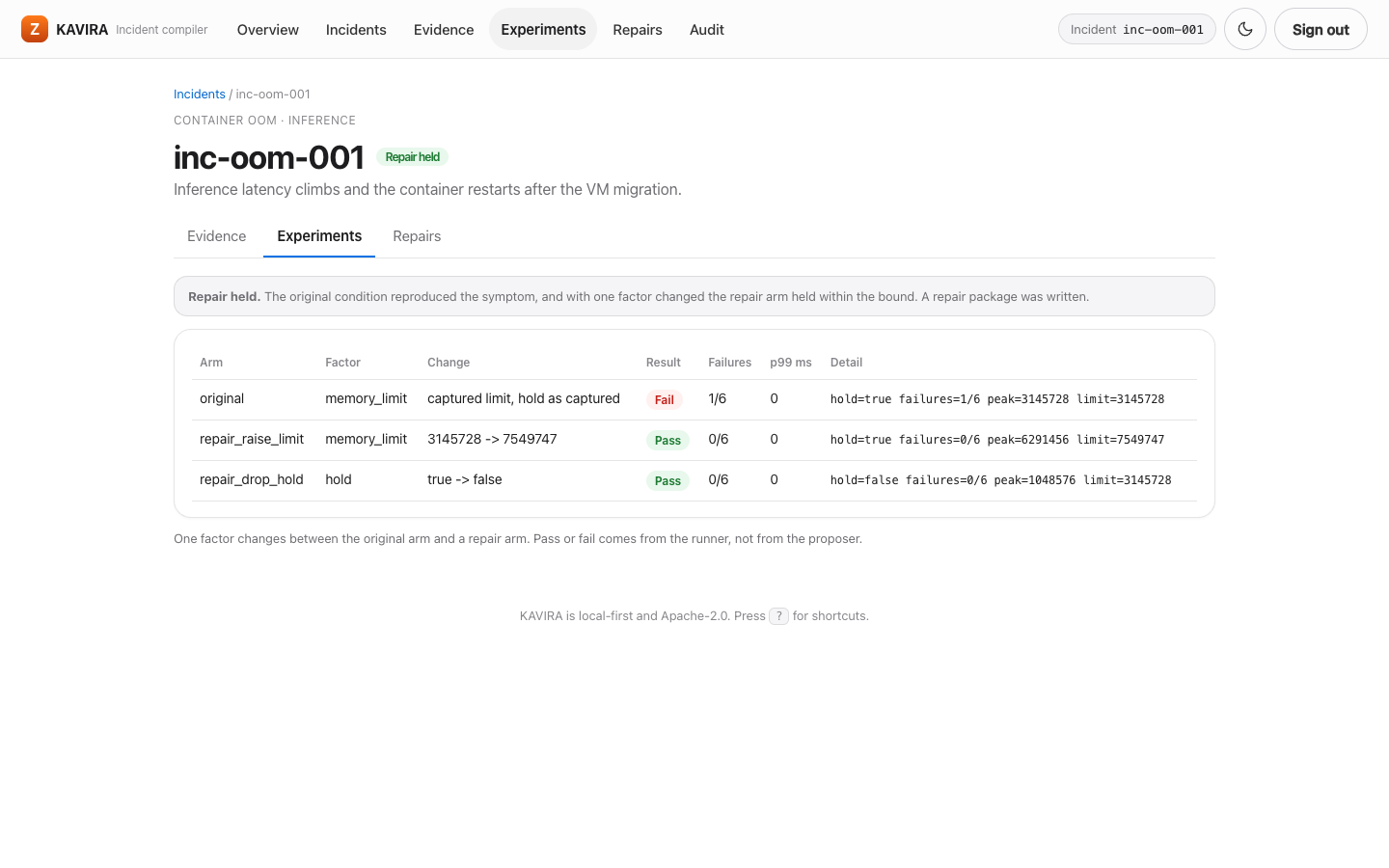
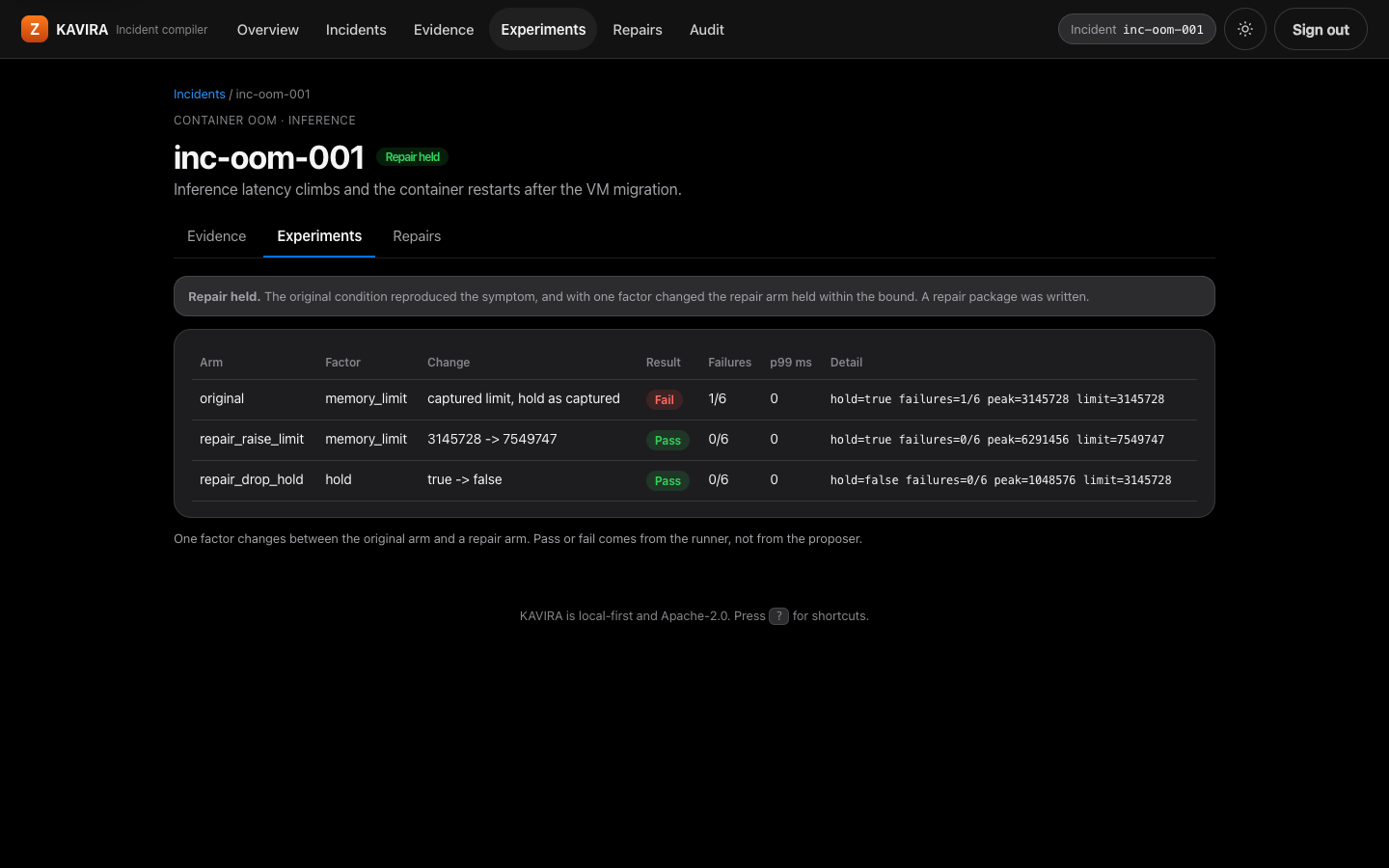
- Experimentchange one factor
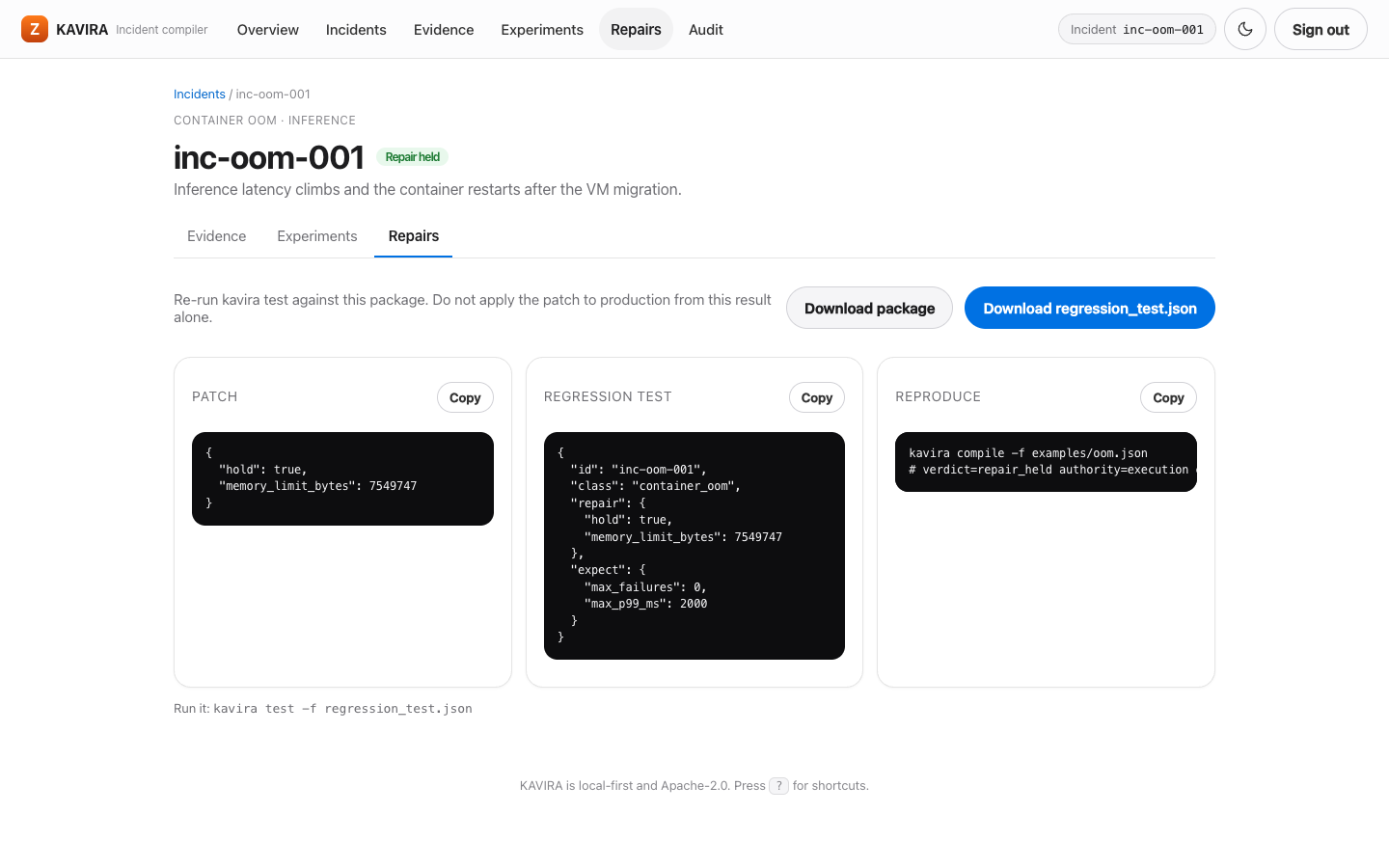
- Repair packagepatch + regression test
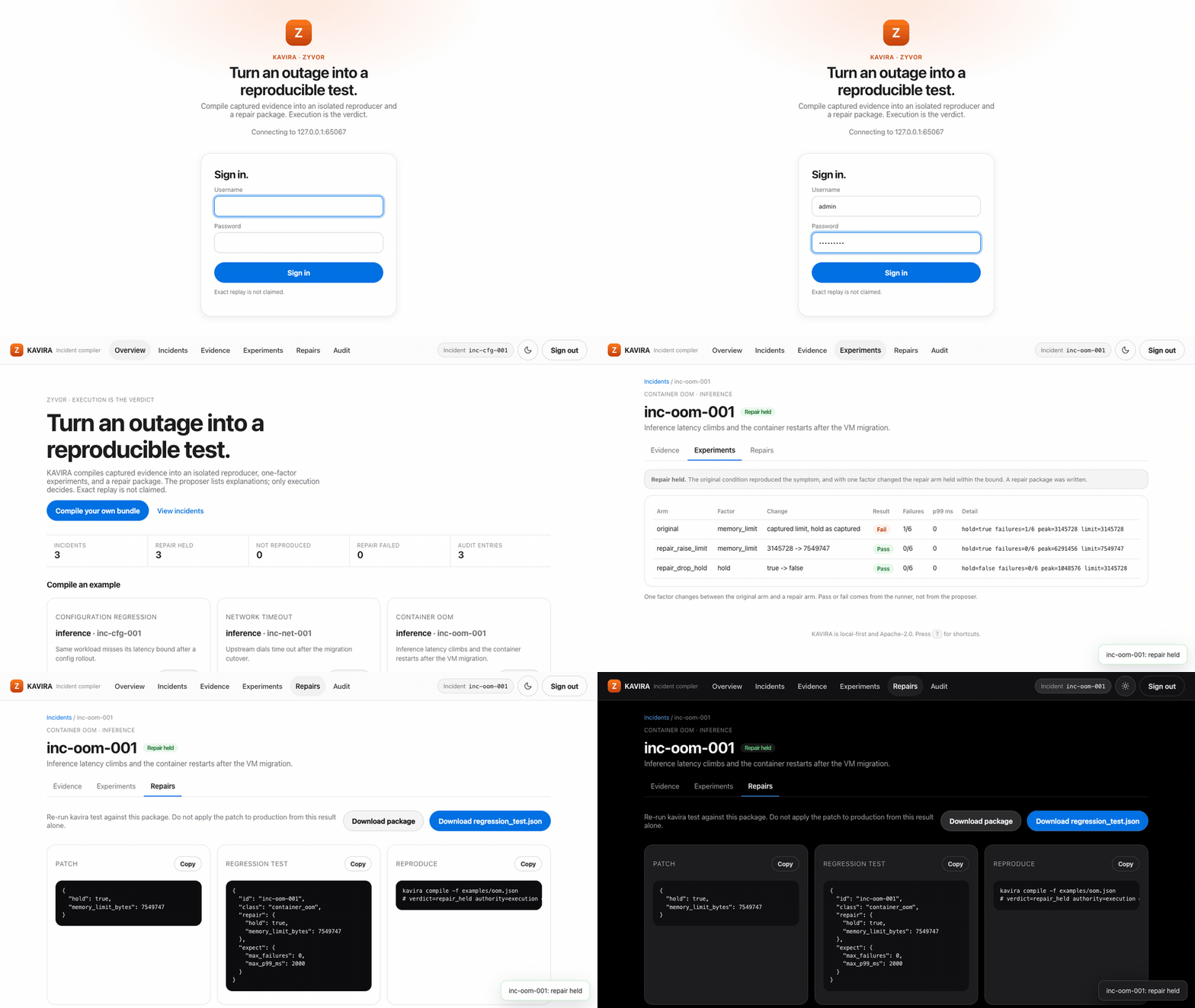
kavira serve. Click through the same console yourself.One factor at a time
If the symptom does not reproduce, KAVIRA stops and says so. A repair package exists only when the repair held.
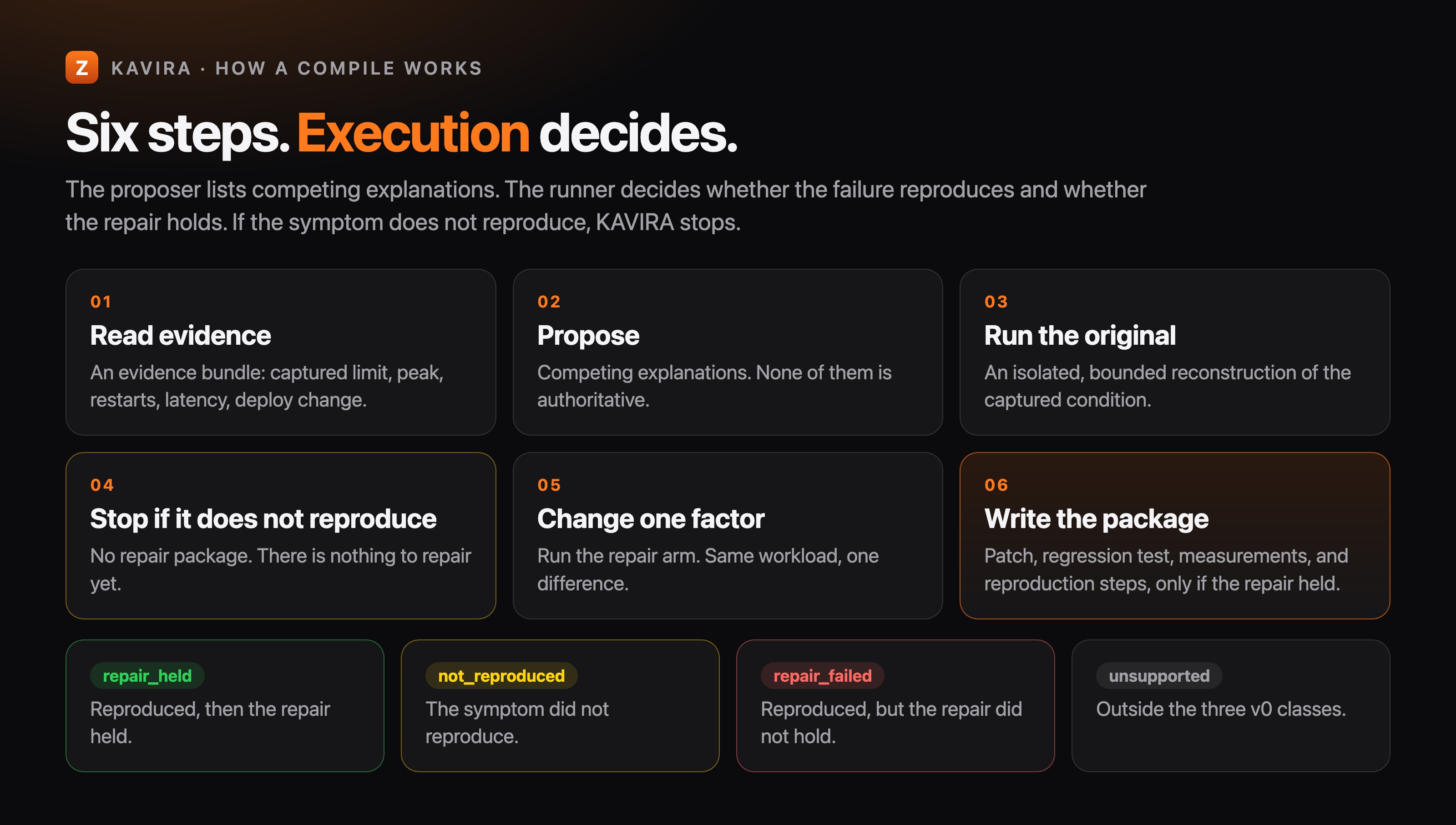
Four verdicts, and what each one writes
The runner sets the verdict, not the proposer. Pick one:
The repair held
The original condition reproduced the symptom. With one factor changed, the repair arm held within the bound.
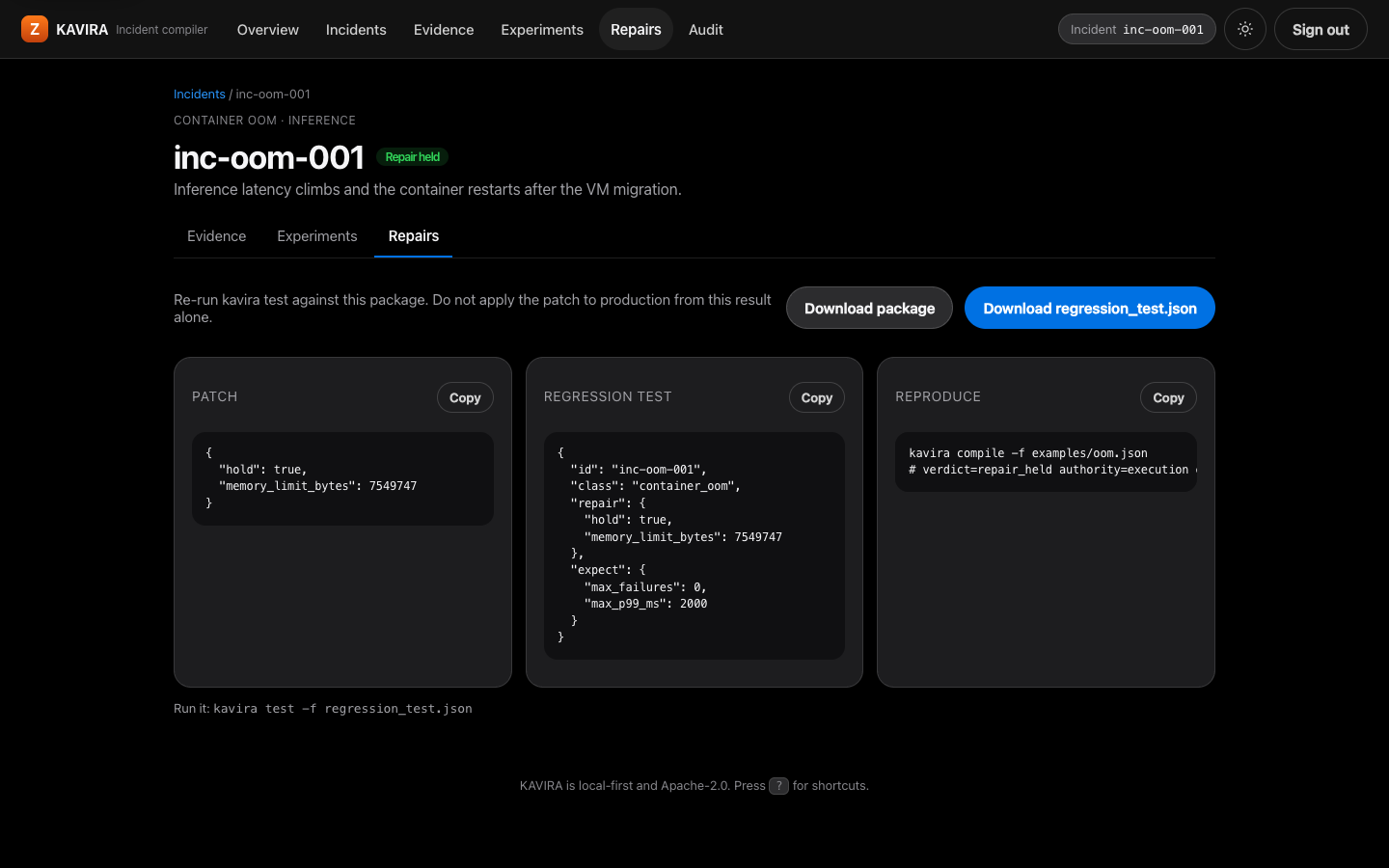
Writes a patch, regression_test.json, measurements, and reproduction steps.
$ kavira compile -f examples/oom.json -o repairs
wrote repairs/inc-oom-001
$ kavira test -f repairs/inc-oom-001/regression_test.json
regression held
The symptom did not reproduce
The captured condition ran and the symptom did not appear, so there is nothing to repair yet. KAVIRA stops instead of guessing.
Writes nothing. No repair package is invented.
$ kavira compile -f incident.json -o repairs
verdict not_reproduced: no package written
It reproduced, but the repair did not hold
The symptom reproduced, then the repair arm failed the bound. A repair that execution did not confirm is not offered.
Writes nothing. The experiments show which arm failed and how.
$ kavira compile -f incident.json -o repairs
verdict repair_failed: no package written
Outside the three v0 classes
Container OOM, network timeout, and configuration regression are supported. Anything else is reported as unsupported rather than approximated.
Writes nothing, and says why.
$ kavira compile -f incident.json -o repairs
verdict unsupported: no package written
Three incident classes in v0
| Incident | Experiment | Repair check |
|---|---|---|
| Container OOM | Bounded workload under the captured memory limit | Failures, memory, latency bound |
| Network timeout | Selected delay, loss, or policy on a local listener | Recovery and connectivity |
| Configuration regression | Previous and current configs, same workload | Behavior diff and a regression test |
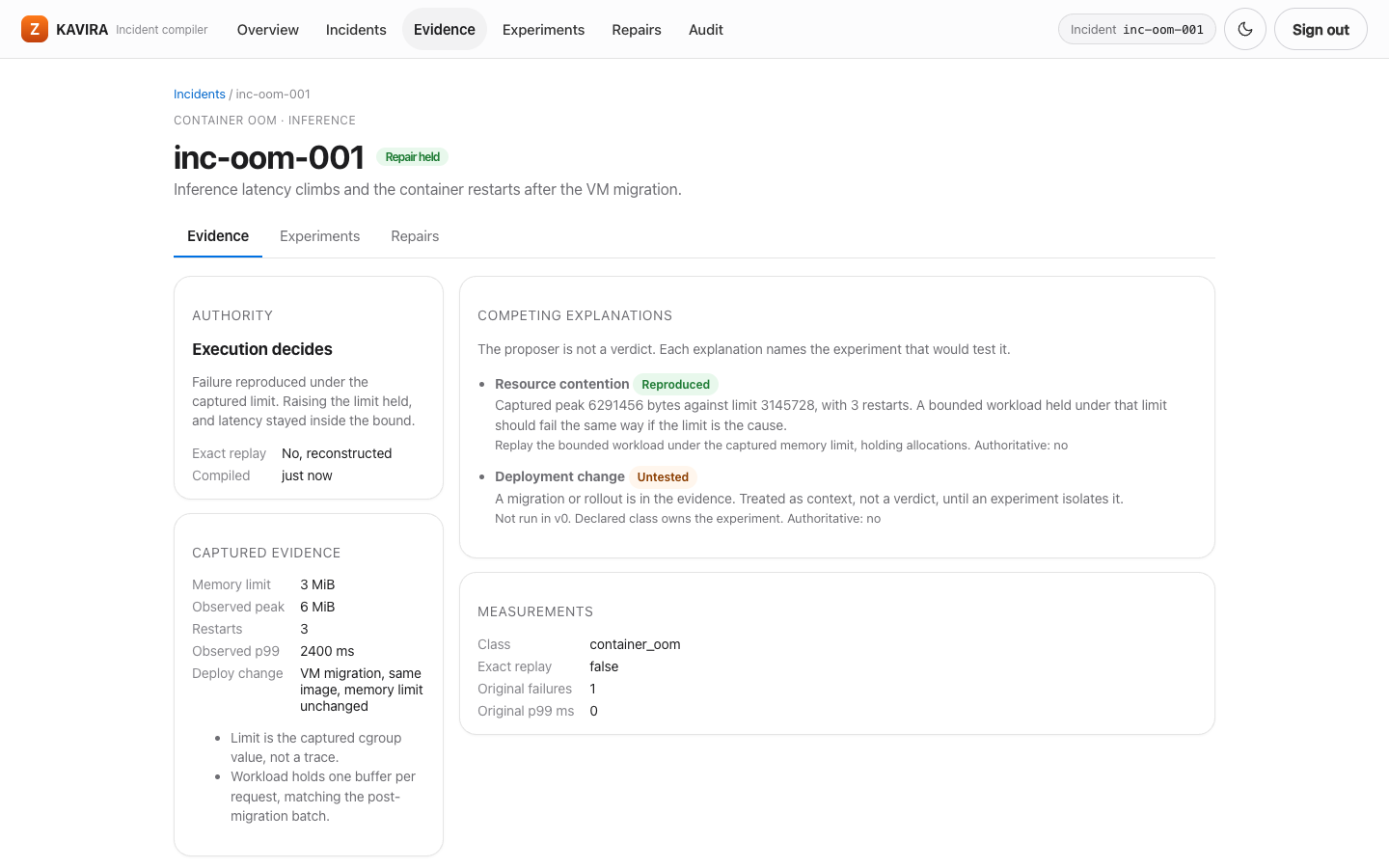
A console that shows its work
Evidence, every experiment arm, and the repair package, with copy and download. Light, dark, and 390px. Open the live demo: it is the real console, running on precompiled results.
Quickstart
git clone https://github.com/zyvorai/kavira.git && cd kavira
make check
./bin/kavira compile -f examples/oom.json -o repairs
./bin/kavira test -f repairs/inc-oom-001/regression_test.json
./bin/kavira serve        # http://127.0.0.1:8080
The console listens on http://127.0.0.1:8080. The demo login (admin / Admin@321) exists only until you set KAVIRA_ADMIN_PASSWORD. Set it, and KAVIRA_SESSION_KEY, and serve HTTPS (-tls-cert/-tls-key, or -tls-self-signed DIR for a lab) before exposing it.
docker build -t kavira .
docker run --rm -p 8080:8080 \
  -e KAVIRA_ADMIN_PASSWORD='choose-a-long-one' \
  -e KAVIRA_SESSION_KEY="$(openssl rand -hex 32)" kavira
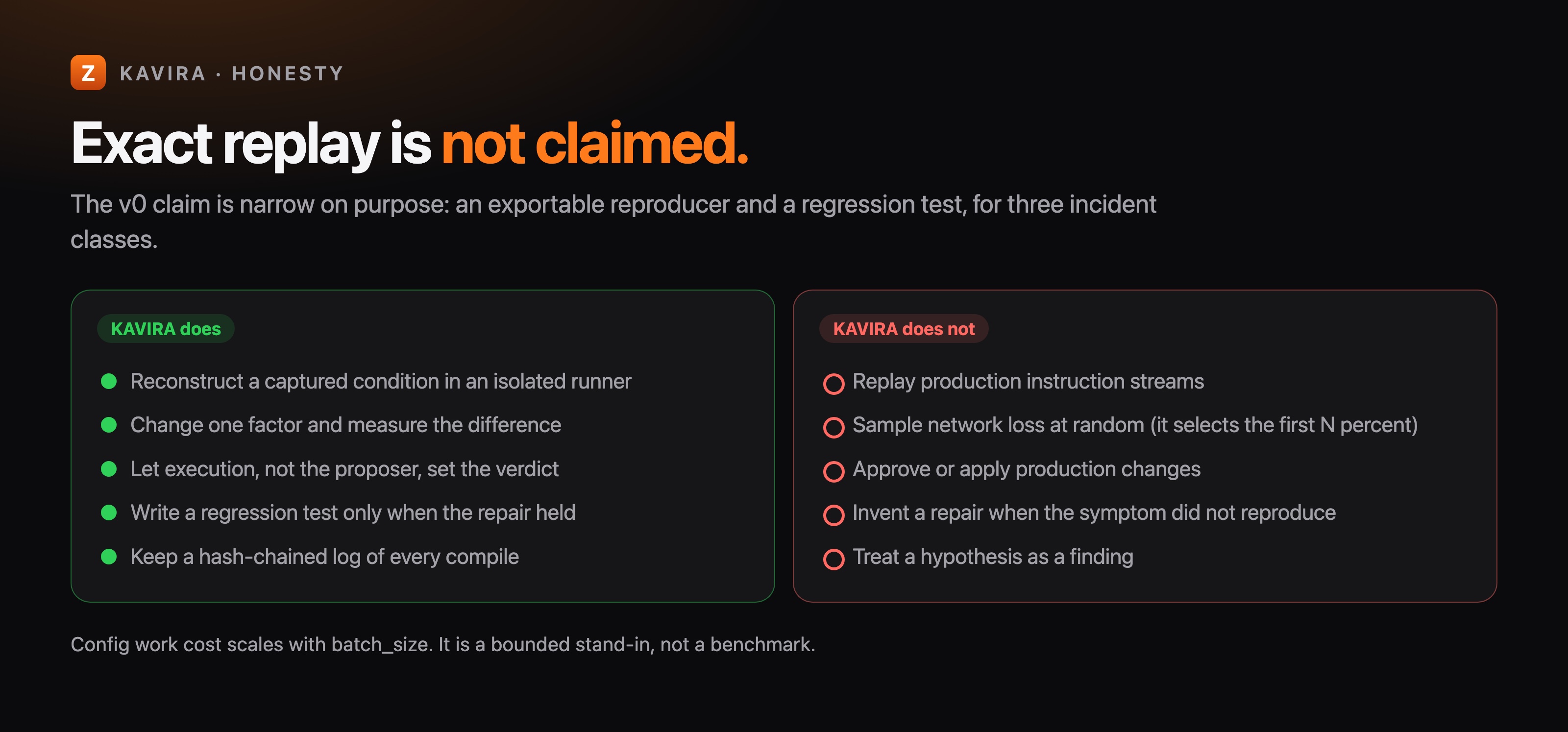
What it does not claim